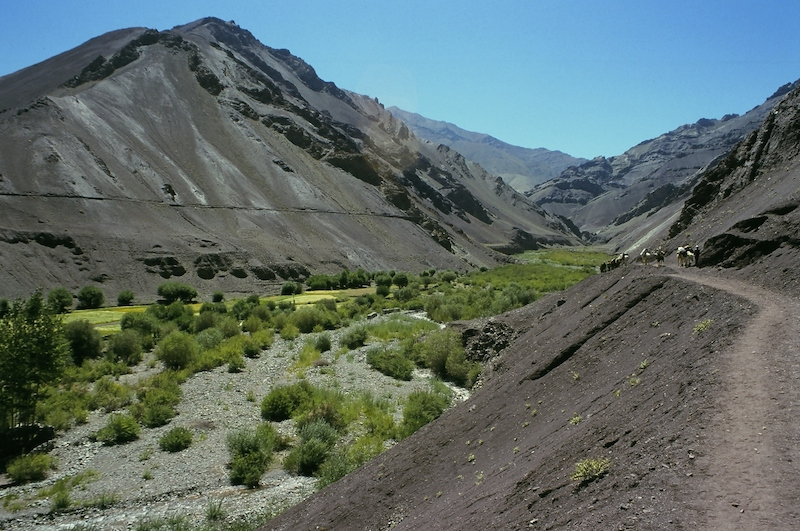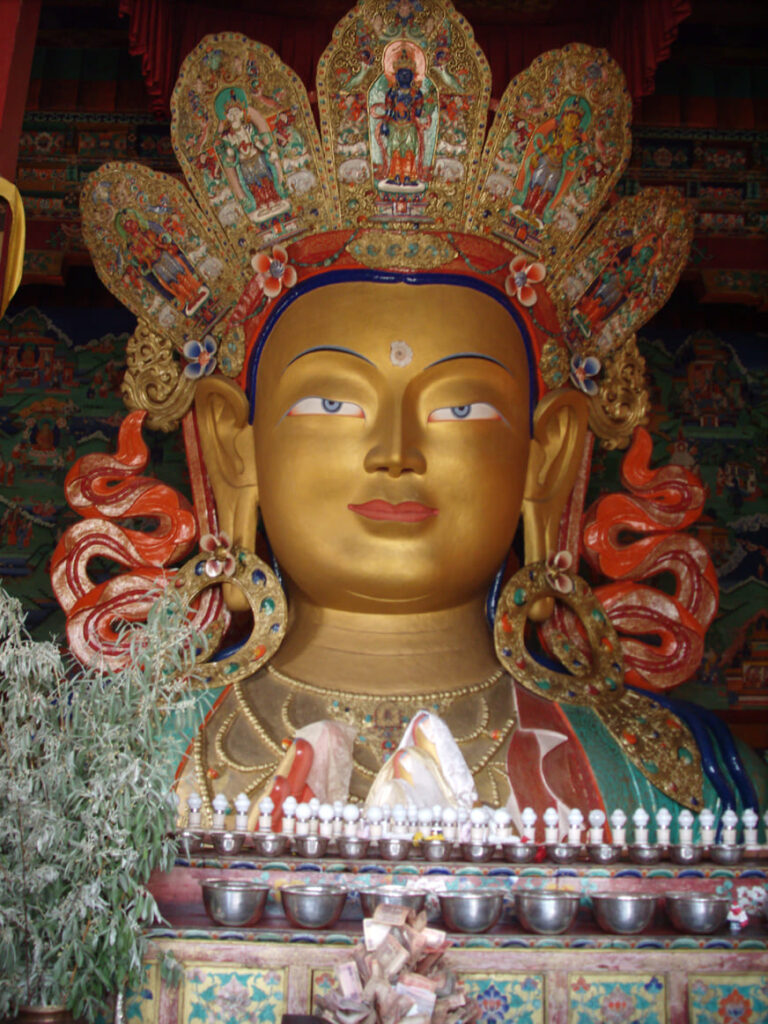
The KangYatse I trek is a high-altitude expedition in Ladakh’s remote Markha Valley, combining classic Himalayan trekking with a semi-technical summit climb. The journey begins with a gradual ascent through Matho and Shang valley, crossing dramatic landscapes and reaching the vast alpine plateau of Nimaling. From here, the route climbs to Base Camp and then higher alpine camps, leading to the 6,400 m summit of Kang Yatse I. The final ascent involves snow slopes, glacier travel, and the use of mountaineering gear such as crampons and ropes. With breathtaking views of the Zanskar and Karakoram ranges from the summit, the trek is ideal for experienced trekkers with good fitness and basic mountaineering skills. Cultural encounters, dramatic high passes, and the thrill of climbing one of Ladakh’s highest peaks make this a truly unforgettable Himalayan adventure.
KANG YATSE I CLIMB
Accommodation
In Delhi, we stay in a standard hotel with air-conditioned rooms. In Leh, accommodation is arranged in a standard hotel conveniently located near the local market and town centre, or in a comfortable family-run guesthouse. Wi-Fi is available in Leh; however, international mobile phones generally do not have network coverage in Ladakh.
Camping & Trek Support
The trek is operated on a full-service camping basis. Our experienced camp staff will handle all camp duties, including pitching and dismantling tents, cooking meals, and managing camp chores, allowing you to trek comfortably with only a day pack.
Most nights are spent wild camping in remote locations. Accommodation is in spacious two-person tents with enough room for kit bags. A separate dining tent is provided, complete with a table and folding chairs, along with at least one eco toilet tent (usually two) for evening use.
There is no running water at the campsites. Camps are set up near rivers or streams, and the camp staff will provide bowls of warm water for basic washing during the trek.
Worth Knowing
• In India, it is common for hotels to provide hot water only at certain times of the day to conserve energy. If your shower water is cold, please inform the reception so they can switch on the water heater.
• Toilet tents used during camping consist of a dug pit (prepared by our camp staff) inside a tent. Dirt or sand is provided beside the pit to cover waste after each use.
• Single rooms and single tents are available on request for an additional supplement, subject to availability. Please enquire at the time of booking.
Day 1: Leh – Drive to Stok (3,497 m), trek to Mankarmo (3,550m)
Trekking time: 5 hrs
The drive from Leh to Stok takes approximately 40 minutes. From there, the route begins in a wide riverbed lined with trees, bushes, and blooming wild roses. Above~4,000 m, the tree line ends and open grasslands with scattered rose bushes dominate. The trail climbs to Changma Pass. Along the way, several abandoned shepherd huts offer insight into past life. The campsite sits directly by the river, with views of snow-capped peaks of Stok Kangri Range and the river valley
Day 2: Mankarmo – over Matho La to Ganpoche
Trekking time: 5 hrs
The trail runs through a wide valley, crossing a river at the start. Wild rhubarb, stinging nettles, colorful wildflowers, and even edelweiss grow along the way. It reaches Matho La (4,950 m), adorned with prayer flags, offering views of rugged, snow-covered peaks and agreen valley below. We pitch our tent not far from a large, traditional shepherd’s house, surrounded by sheep and goats – a lively contrast to the silence of the pass
Day 3: Ganpoche – Shang La – Shang Pu
Trekking time: 6 hrs
In the wide, green valley below Matho La lies a large traditional shepherd’s house with sheep, goats, cows, and donkeys, where yogurt and butter are made traditionally. The campsite is on a lush meadow with stunning views of snowy mountains and the valley—a peaceful, spacious place to relax
Day 4: Shang Pu – Gyuncho La – Chuskurmo
Trekking time: 5 hrs
The trail winds over narrow paths, shifting from barren terrain to fertile meadows with yak herds. Above 4,000 m, the tree line begins, and willow woodis used locally for interior elements and beams. The endpoint is a settled village with a campsite, marking the end of the Markha Valley trek
Day 5: Chuskurmo – Kongmaru La Pass – Nimaling
Trekking time: 7 hrs
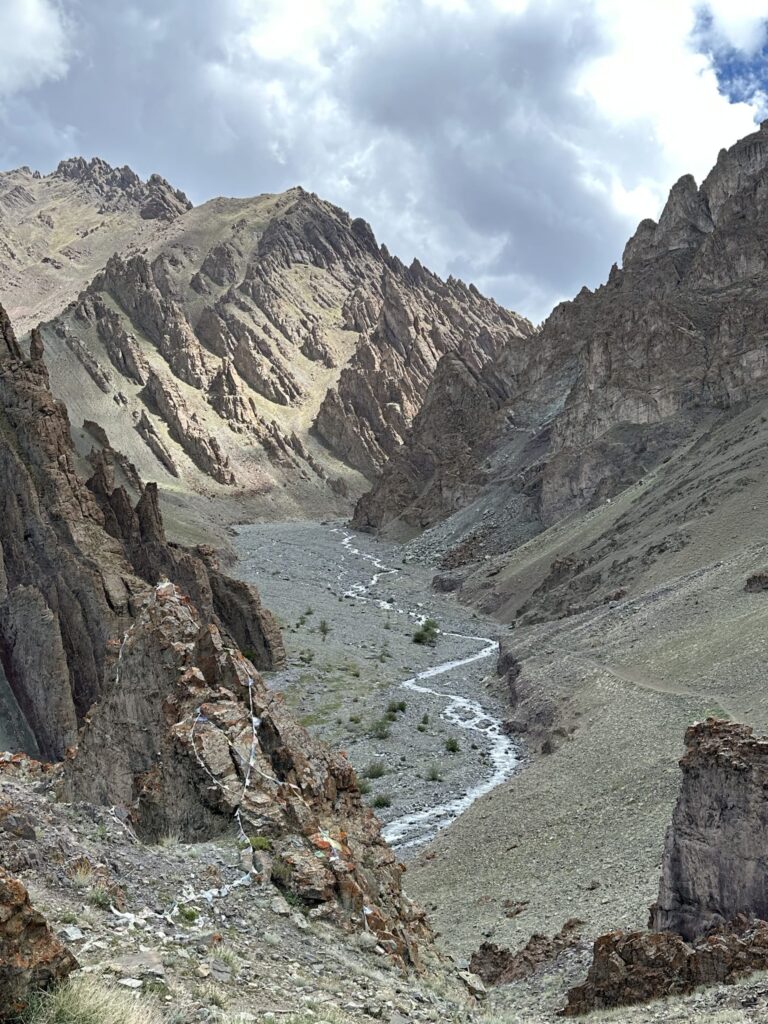
We have a tough day today. The trail winds through a stunning landscape of abandoned terraced fields and a narrow gorge. Along the way, blue sheep can often be spotted, and argalis are known to roam near the Kongmaru La Pass (5,250m). The route offers sweeping views of the surrounding valleys. The journey crosses Kongmaru La Pass, a high and scenic point that must be traversed before descending to Nimaling
Day 6: Nimaling (4,800m) to Base Camp (5,100 m)
Trekking time: 3 hrs
A shorter yet steeper trek takes you from Nimaling to the base of Kang Yatse I. The Base Camp is set in a wide glacial basin, surrounded by snow-capped peaks and ridgelines. After setting up camp, the afternoon is spent resting, hydrating and organizing climbing gear
Day 7: Rest and Acclimatisation Day at Base Camp (5,100 m)
Today is dedicated to acclimatisation. You can take short acclimatisation hikes above camp, explore the surrounding moraine fields. This rest day significantly increases your chances of a successful summit
Day 8: Base Camp to Camp I (5,700 m)
The trail becomes more technical as you move onto snow and ice fields. The route to Camp I involves steep inclines, loose scree, and possible glacier crossings, depending on conditions. As you climb higher, the terrain becomes more alpine, with sweeping views of Nimaling and the surrounding ranges. Camp I is located on a glacial shelf, providing stunning sunset views but also very cold and exposed conditions
Day 9: Camp I to Camp II (5,900 m)
Though this is a shorter day, it’s physically taxing due to the high altitude and steep gradient. The climb includes technical snow sections and roped segments, depending on the conditions. The objective is to reach Camp II early and rest before the summit push.
Day 10: Camp II – Summit Kang Yatse I (6,400 m) – Return to Camp I
An early morning alpine start begins the most important day of the expedition. As dawn breaks, you’ll likely benearing the summit ridge. From the top of Kang Yatse I, the views are awe-inspiring: to the north lie the Karakoram peaks, while to the south stretch the endless ridges of Zanskar and Changtang Range. After spending a short time at the summit, you descend back to Camp I
Day 11: Camp I to Base Camp(5,100 m)
Trekking time: 2 – 3 hrs
This is a relatively easy descent compared to the previous days. Retracing your steps over the glacier and moraine, you return to Base Camp
Day 12: Base Camp – Nimaling – cross Kongmaru La (5,250 m) – descend to Chokdo (4,150 m) – Drive to Leh
Trekking time: 6 – 7 hrs, drive: 2 hrs
On the final day, we leave the base camp and retrace our steps past Nimaling, which we had passed on our way up to Kang Yatse I. From there, we begin the tough but beautiful ascent to Kongmaru La, a high mountain pass offering magnificent panoramic views. From the top, the trail descends steeply into a colorful canyon carved by glacial rivers, winding through a dramatic gorge system before reaching the village of Chokdo. Here, we’ll be picked up by vehicle and driven back to Leh, marking the end of an unforgettable expedition.
For more information or detailed itinerary, please contact us:
Email: chosphel5@yahoo.com
Phone/WhatsApp: +91 9419983077
No Information
Related Tours
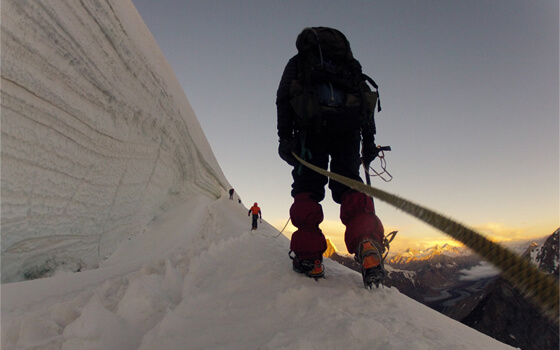
HIGH ALTITUDE TREK FROM CHOGDO TO RUMTSE
Winding through the remote valleys of Meru, Pu Yul, Kidchen, and Kotsa,…
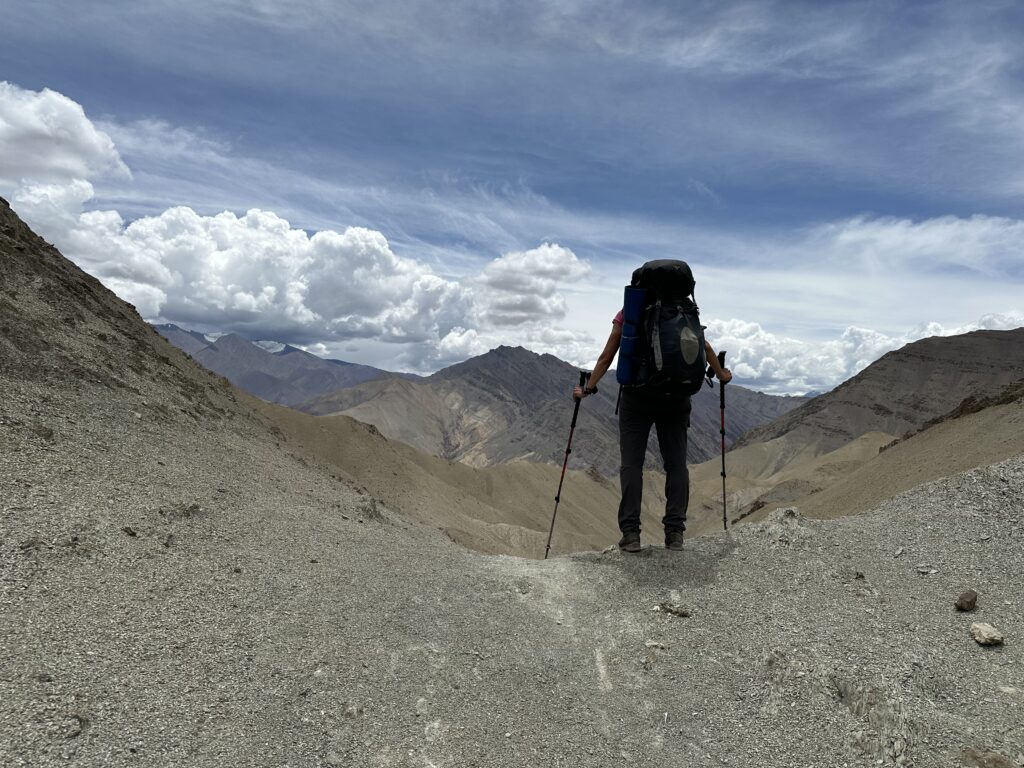
HIGH PASSES TREK FROM STOK TO DAT
This unforgettable trekking route takes you deep into the remote and spectacular…